Low budget
Every part comes from an online shop or a 3D printer.
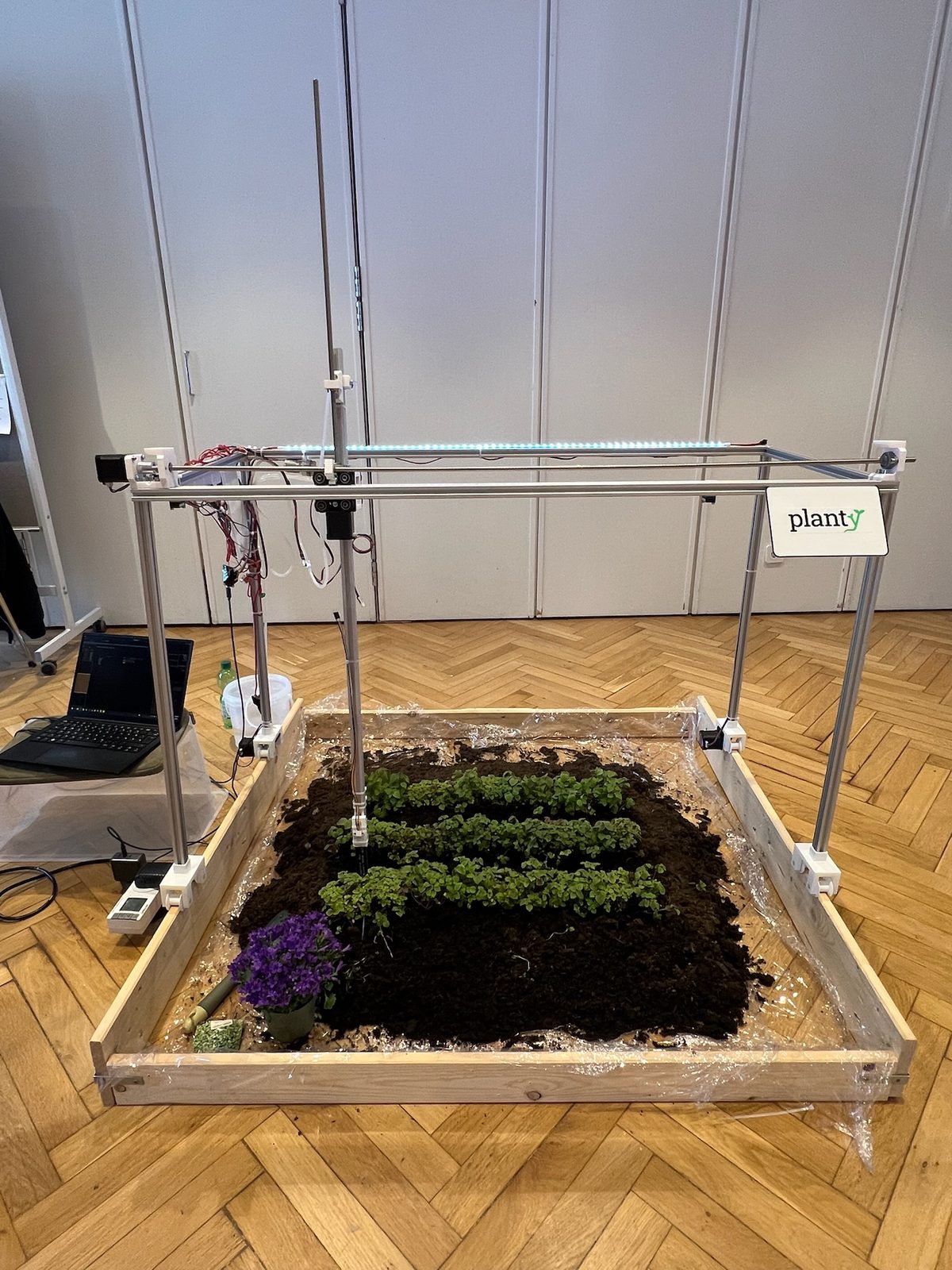
Prototype v0.1, Jugend forscht 2026
An autonomous plant robot. A carriage glides over a garden bed on aluminium rails, moves a watering head across the plants, and is controlled over WiFi.
Planty is built from aluminium profiles, 3D printed parts and ordinary electronics. The carriage rolls on wheels driven by stepper motors. A lead screw lowers the head, and a valve controls the water. The control software talks to the robot over WiFi.
Everything is open source: the software, the 3D models and the build notes. The current version is a v0.1 prototype, and the project is being reworked.
Every part comes from an online shop or a 3D printer.
The goal is a bed of any size, built from modular wooden frames.
The models and the build guide are free to download, so anyone can build a copy.
The prototype is made of five parts. Each one is shown in the photos.
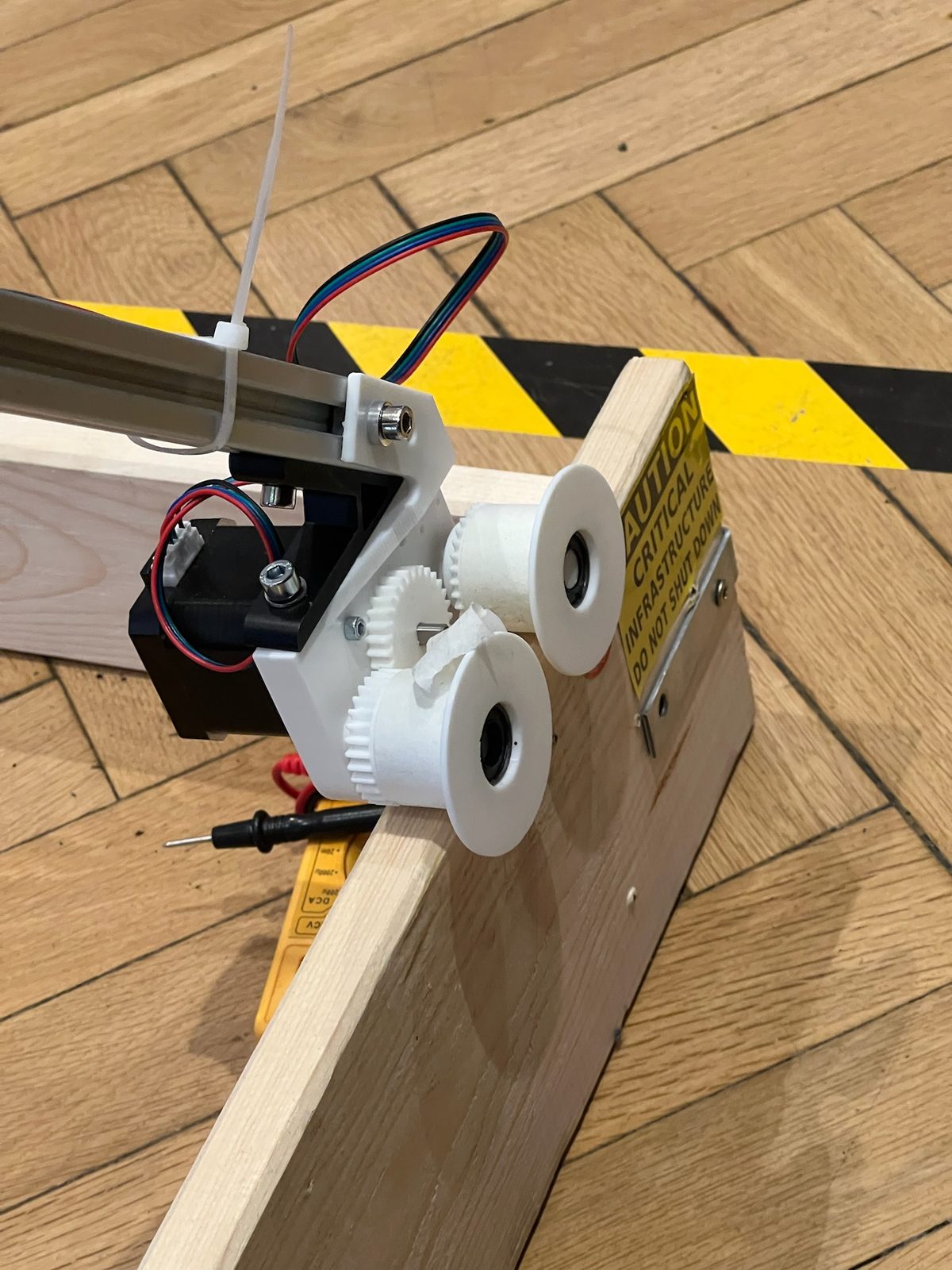
An aluminium profile frame carries the carriage. Stepper motors turn printed gears, and the gears turn wheels that roll the carriage along the rail. An LED strip runs along the top beam.
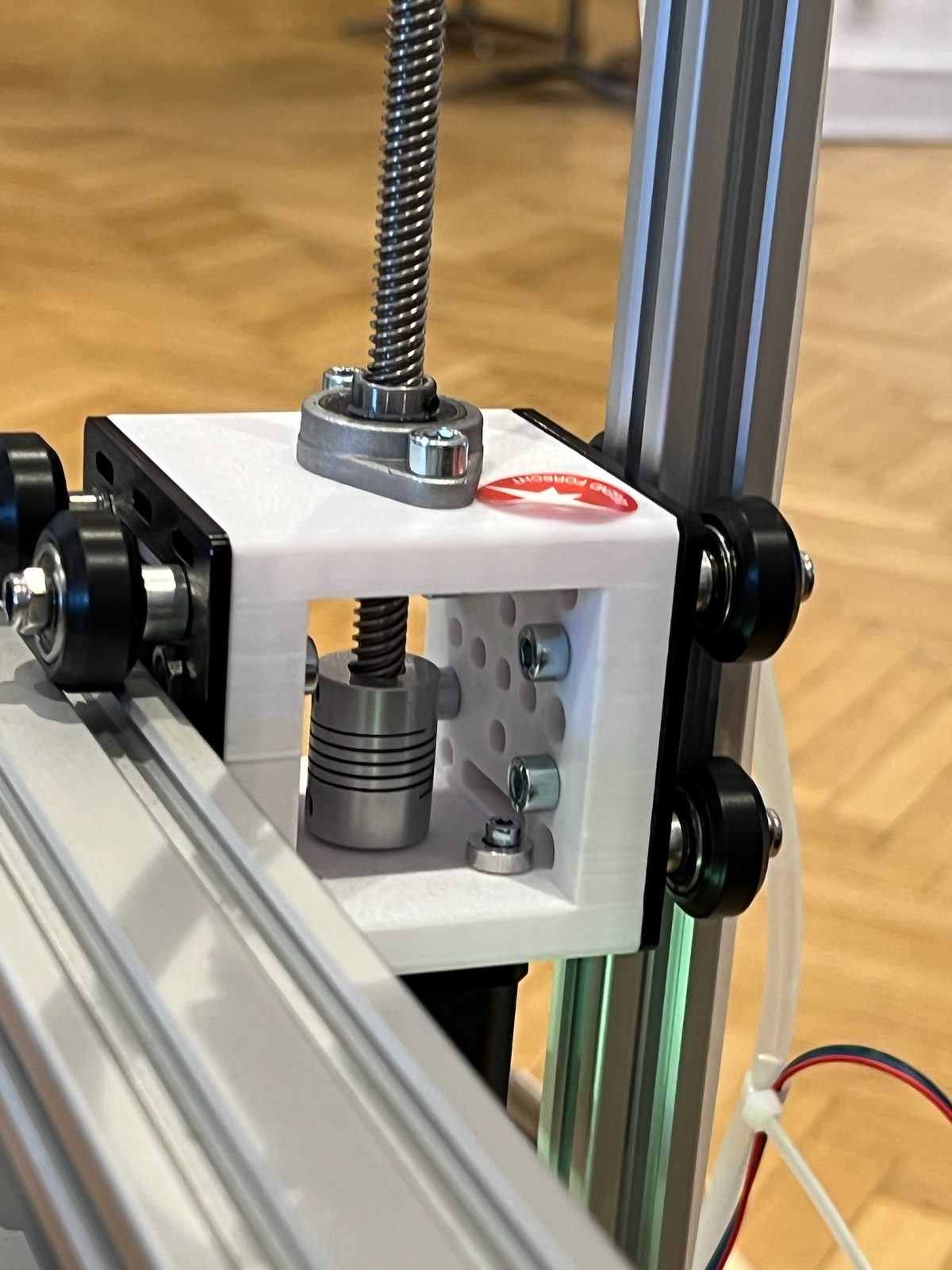
A lead screw raises and lowers the head. A flexible coupler joins the screw to the motor shaft, and printed brackets hold the parts in place.
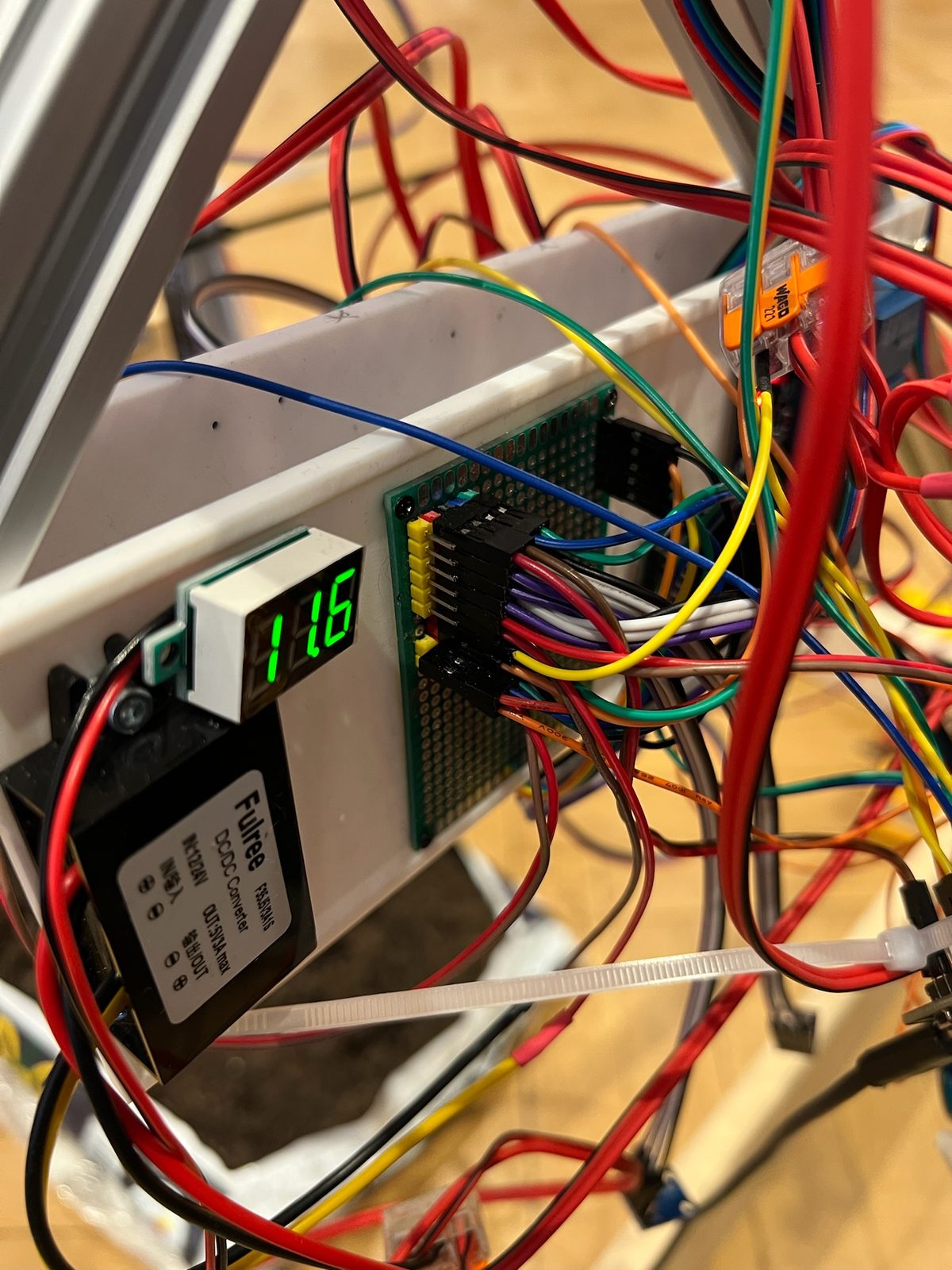
An ESP32 controls the motors and the valve, and reads the sensors. A DC-DC converter powers the electronics, and a small green display shows a live reading. The wiring runs through a perfboard with pin headers.
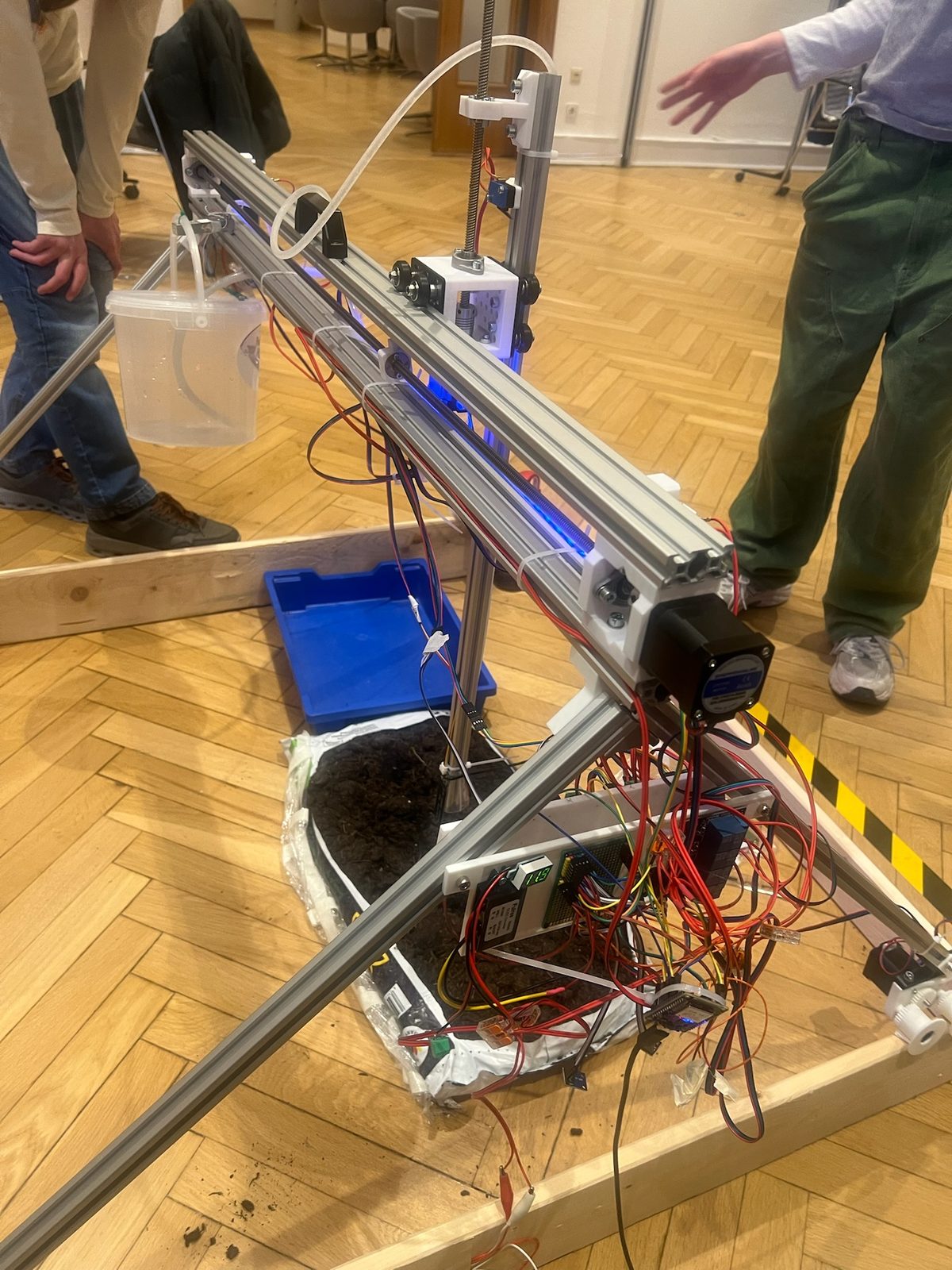
A bucket holds the water, and clear tubing carries it up to the gantry. A valve in the line controls the flow.
Modular wooden frames hold the soil, and the bed is lined with plastic film. The goal is a bed of any size, built from more modules.
All sixteen photos from the project. Click one to open it, then use the arrow keys to move through them.
Planty took part in Jugend forscht, Germany's best-known youth science competition. The team went from the regional round in Berlin Süd to the state competition in Berlin.
The 61st regional round. The team showed the prototype at a booth, with a poster explaining the project.
Jaden Cheng and Philipp Rochlitz won second prize. Mila Maier won the special prize for open source software or hardware, sponsored by QUNIFY GmbH.
A new wheel system, designed in FreeCAD, is strong enough to carry the whole robot. A blog post about the rework is planned.
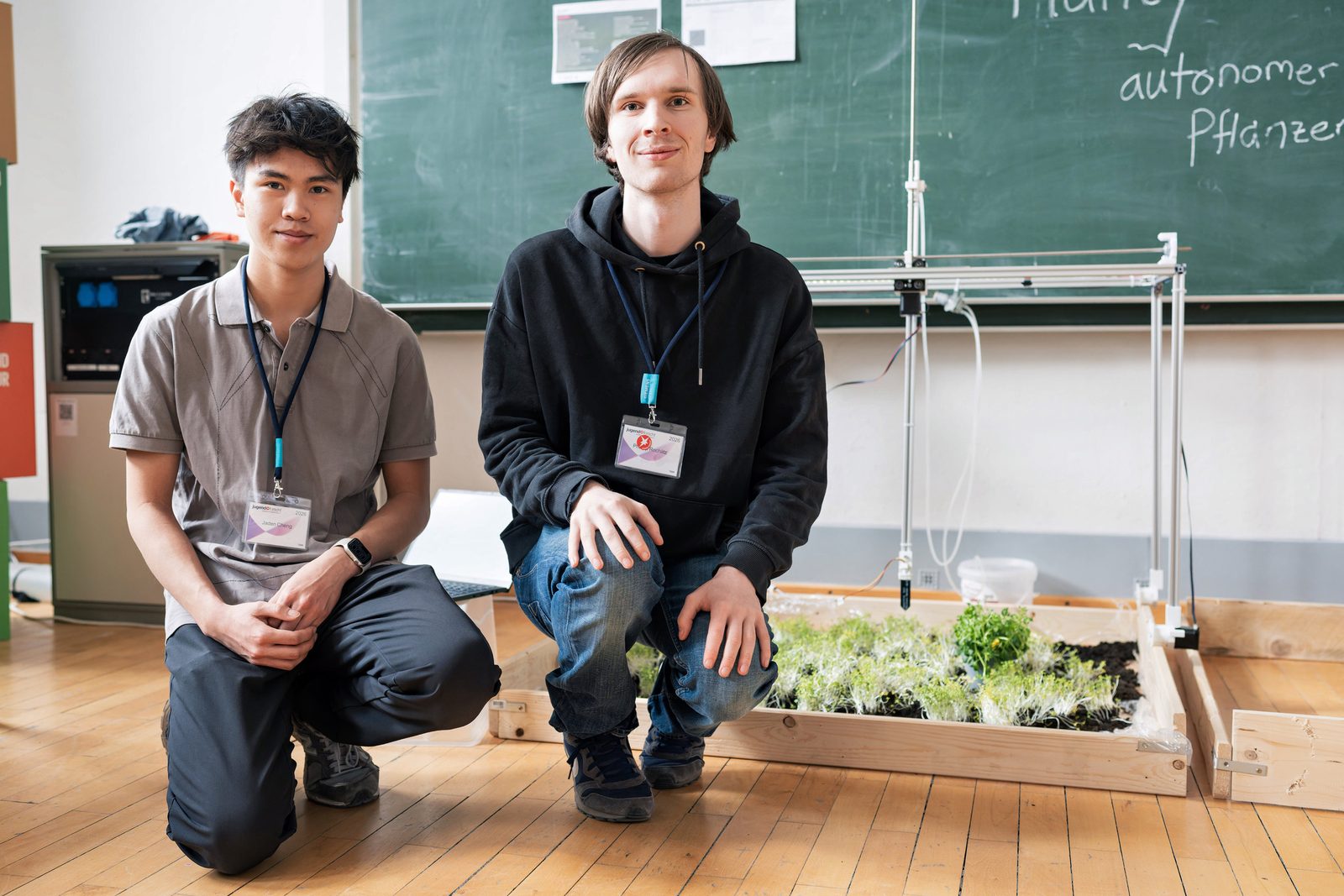
Second prize, state competition Berlin 2026
Special prize for open source software or hardware
Second prize, state competition Berlin 2026
The team is from the John-Lennon-Gymnasium in Berlin.